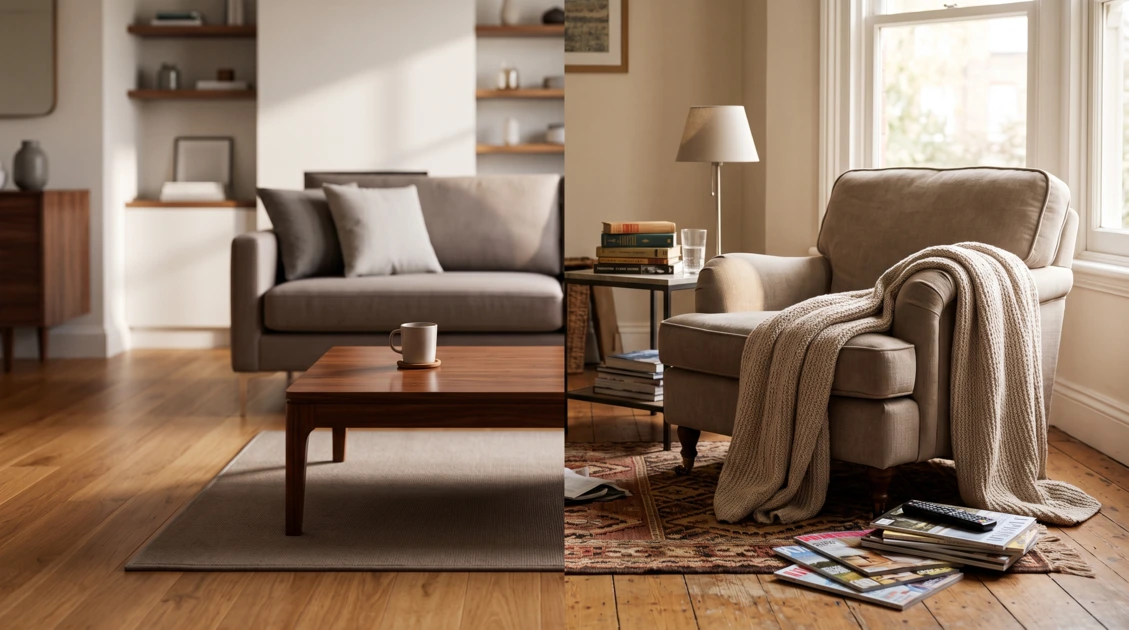

You visit someone’s home for the first time. There are dishes beside the sink, unopened mail on the table, toys across the floor, and dust on a shelf. You say nothing, but your mind begins creating a story about the person who lives there.
Do you judge people by how clean their home is, even when you know you may not understand their circumstances?
A home can reveal habits and preferences, but it can also reflect children, illness, caregiving, demanding work, financial pressure, limited space, or one unusually difficult week. Cast your vote before deciding how much a private living space can fairly tell us.
This informal poll reflects the opinions of participating readers and is not a scientifically representative survey.
A Home Creates an Instant Story
People frequently make judgments from limited information. A tidy kitchen may suggest organisation and self-discipline. A cluttered living room may suggest carelessness. Fresh towels and an empty sink may feel welcoming, while unpleasant smells or overflowing rubbish may create immediate discomfort.
Research shows that personal environments do contain cues people use to form impressions. In a 2002 study, observers examined offices and bedrooms without meeting the occupants. They reached some consistent—and sometimes reasonably accurate—judgments about personality traits such as conscientiousness, openness, and extraversion. Bedrooms generally provided more useful personality information than offices.
That does not mean every impression was correct. A room may provide clues, but it does not provide a complete explanation of the person, their circumstances, or the effort required to maintain the space.
Clean, Cluttered, or Unsanitary?
People often use “dirty” and “messy” as though they mean the same thing.
A home may be cluttered with books, craft materials, children’s toys, clothes, or unfinished projects while remaining hygienic. Another home may appear visually tidy but contain spoiled food, mould, pests, unsafe surfaces, or an unclean bathroom.
This distinction can change the moral judgment.
Personal taste determines whether decorative objects, paperwork, or a busy kitchen counter feel comfortable or chaotic. Hygiene and safety have clearer consequences, particularly when contaminated food, blocked exits, dangerous objects, or serious sanitation problems affect residents, children, guests, or animals.
A visitor may reasonably decide that a situation is unsafe without concluding that the resident is lazy, irresponsible, or a bad person. Concern focuses on the condition and its consequences. Judgment assigns a character explanation before the full circumstances are known.
What the Room Can—and Cannot—Tell You
Neatness can sometimes reflect conscientious habits, and observers in the office-and-bedroom study used visible organisation when forming impressions. Yet the researchers did not conclude that rooms provide perfect access to personality. Accuracy differed by trait, setting, and available cues.
A spotless home can also create a misleading impression. The resident may have cleaned for hours before guests arrived, moved clutter into another room, paid for help, or become anxious about being judged. The home visitors see may be a carefully prepared version rather than an ordinary day.
The reverse is equally possible. A normally organised person may be recovering from illness, caring for a baby, working through a demanding period, moving house, grieving, or sharing the home with people who have different habits.
One visit gives you a scene. It rarely gives you the history behind it.
Clutter Can Be Stressful Without Being a Character Flaw
The relationship between a home and well-being can also work in both directions. A stressful period may make cleaning harder, while a difficult home environment may make it harder to relax.
A study of 60 dual-income married couples analysed the language they used while giving researchers tours of their homes. Women who described their homes using more words associated with clutter and unfinished tasks showed less favourable daily cortisol patterns and increasingly depressed mood across the day. Women who described their homes as more restorative showed the opposite mood pattern.
The study was small, correlational, and focused on dual-income couples—particularly the wives’ stress responses. It did not prove that clutter directly caused poor mental or physical health. The results instead suggest that the meaning people attach to their home environment may be connected with how restorative or stressful home life feels.
This is different from saying that a cluttered home reveals a weak character. The person living there may already feel overwhelmed and ashamed. A guest’s silent contempt adds no useful understanding.
Ordinary Mess Should Not Become a Diagnosis
It is also inappropriate to casually label someone a “hoarder” because their home contains clutter.
The American Psychiatric Association describes hoarding disorder as persistent difficulty discarding possessions, accompanied by clutter that substantially compromises the intended use of living areas and causes significant distress or impairment. A disorganised desk, untidy bedroom, crowded cupboard, or difficult month does not establish that condition.
Diagnosing someone from a brief visit can turn an everyday difference into a mental-health label. It may also distract from the practical question: does the person want help, and is the condition affecting their safety or ability to use the home?
When serious clutter does interfere with cooking, bathing, sleeping, movement, fire safety, or relationships, respectful concern is more appropriate than jokes, gossip, photographs, or forced clearing without understanding the situation.
Hospitality Does Not Require Perfection
A home is both a private space and a place where people sometimes receive guests. That creates competing expectations.
Hosts may feel responsible for providing a reasonably clean bathroom, somewhere safe to sit, and food prepared under hygienic conditions. Guests, however, are entering a space where real life happens. Children play, pets shed hair, laundry accumulates, and people do not always have time to prepare their home as though it were being photographed.
The relationship matters too. A close friend dropping by unexpectedly should probably expect a more authentic scene than a dinner guest invited several weeks in advance.
Visitors can also ask whether the condition actually affects them. A few toys on the floor may be irrelevant. A strong smell, contaminated food, or nowhere safe to walk may reasonably change whether they feel comfortable returning.
Standards become unfair when personal preference is treated as a universal measure of maturity, morality, parenting ability, or worth.
Judgment May Reveal Something About the Guest Too
The condition of a home is not the only information present during a visit. The guest’s reaction also reveals priorities.
One person notices whether the bathroom shines. Another notices whether the host is generous, relaxed, attentive, and pleased to see them. Some people feel comfortable in a lived-in home because it signals authenticity. Others struggle to relax around visible disorder.
These reactions may come from childhood expectations, culture, previous experiences, sensitivity to smells, fear of contamination, or a strong need for visual order. Recognising that influence does not require pretending every home condition is acceptable. It means acknowledging that part of the judgment comes from the observer’s standard, not only from the resident’s behaviour.
A useful private question is:
“Am I responding to a real hygiene or safety problem, or to a home that is simply maintained differently from mine?”
What Do You Think?
Where should people draw the line between noticing a home’s condition, having reasonable hygiene standards, and making unfair assumptions about the person who lives there?
How clean their home is may offer clues about someone’s habits, but it cannot reveal their full workload, health, resources, family life, or character. Cast your vote, then explain whether you judge the mess itself, the circumstances behind it, or the way the host treats the people who enter.